
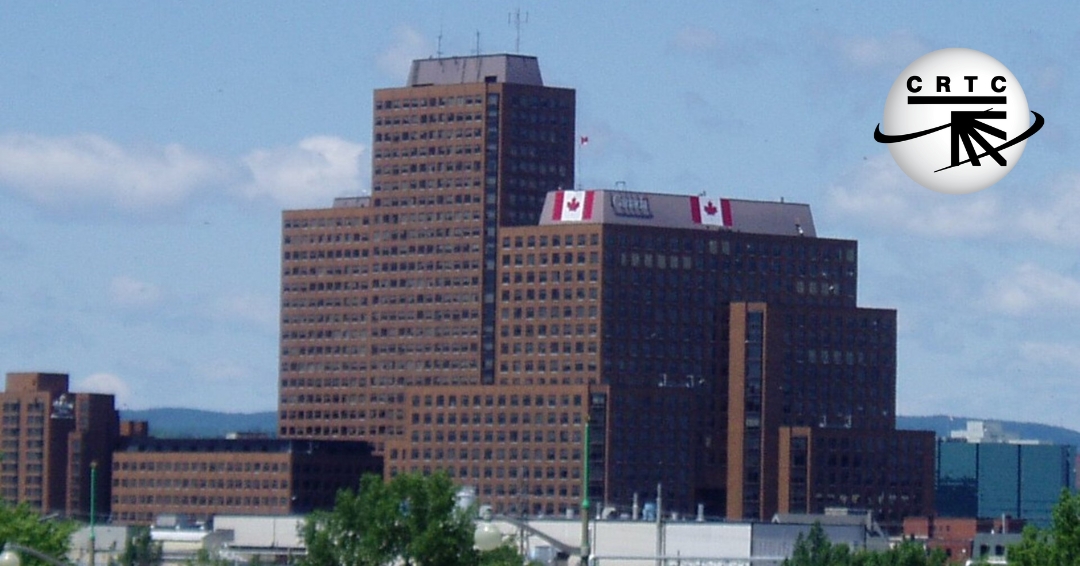
Chiara Sáez and Patricia Peña took part in several hearings of the Canadian autonomous regulator.
The main objective of the trip was to gain first-hand knowledge about the functioning of the Canadian Radio-Television and Telecommunications Commission (CRTC), the body responsible for regulating broadcasting, telecommunications and digital services in the country.
During their stay, the researchers attended public hearings convened by the CRTC focused on the definition of what constitutes Canadian content, a focal point in the modernization process of audiovisual regulation in Canada, based on the Online Streaming Act.

The issues discussed in these hearings included the modernization of the definition of Canadian program and measures to strengthen the creation and distribution of national content. The updated criteria for rating a production as Canadian, the investment requirements of broadcasters in local programing (CPE) and support for at-risk content such as regional and francophone news were also discussed, as well as the impact of artificial intelligence in the audiovisual industry.
A study about public perception was also presented that highlights the importance of access to Canadian content. This hearing is part of the CRTC’s efforts to adapt the regulation to the current challenges of the digital ecosystem and guarantee a strong and representative broadcasting system.
Additionally, Sáez and Peña had a meeting with Nicole Dadier and part of the CRTC team, which enabled a direct and enriching exchange about the practical functioning of these types of regulatory bodies.

The visit falls within the comparative approach of the Fondecyt Project and allows integrating relevant lessons for the analysis and strengthening of a convergent regulatory institutionalism in communications in Chile.
Professor Sáez pointed out that “in this trip, we were able to close the field interviews and our knowledge of the project’s case studies. And in the specific case of the CRTC, it was interesting to understand how they are incorporating the regulation of digital services through the Online News act”. She also underscored the importance of closely observing the evolution that the implementation of this act has had.

Reflecting on the Canadian context, the researcher explained: “Knowing the history of tension in this country’s cultural industry in relation to the United States, Canada is a country that has always needed to have policies that promote its culture in a very strong way through its cultural industries to counterbalance the powerful cultural industry of the United States that is always pervading its neighboring country.”
Sáez also said that attending the public hearings held by the regulator during the trip was extremely important, as they were able to witness how what is understood by Canadian content today is discussed in them, especially considering the new layers introduced by convergence in the audiovisual industry. They were also able to observe how national contents are built and positioned in a context of high circulation of international productions, as is the case of streaming platforms.
To learn more about the public hearings of the CRTC, review the official information on the following link.

 ENGLISH
  ESPANOL