
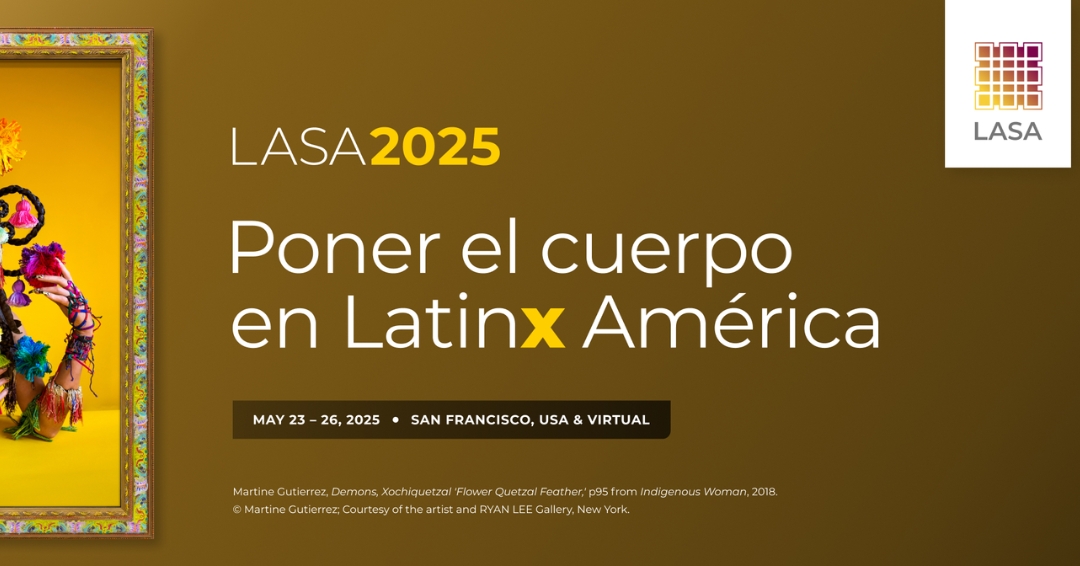
The academics presented the advances of their research on convergent regulation at the Annual Congress of the Latin American Studies Association (LASA), held on May 23rd-26th in San Francisco, United States.
The Fondecyt Project “Critical Factors for Establishing a Convergent Regulatory Institutionalism of Communications in Chile from the Perspective of Comparative Media Systems” seeks to provide tools for designing a national public policy in this matter.
The research led by Chiara Sáez analyzes the current challenges of regulatory frameworks in terms of the convergence of broadcasting, telecommunications and Internet in a global scenario marked by the expansion of digital platforms and big techs. It also contrasts these experiences with recommendations from multilateral organizations such as UNESCO, the OECD, the European Union and the Inter-American Commission on Human Rights, which have promoted principles of pluralism, transparency, freedom of expression and accountability in digital governance.

The presentation “Regulating Techno-Media Convergence: Lessons from a Multilateral Approach and National Cases from the South” accounts for the advances of the Project on #RegulaciónConvergente, which analyzes regulatory experiences in the context of the digital transformation with a special focus on cases such as Canada, Mexico, Colombia, the United Kingdom and Chile.

The Latin American Studies Association (LASA) is the main professional association in the world dedicated to the study of Latin America. With over 12,000 members from various countries and disciplines, LASA promotes research, academic exchange and interdisciplinary debate on key issues for the region. Its annual congress congregates researchers, academics, journalists and representatives of social organizations in panels, conferences and meetings addressing the political, social, cultural and communicational realities of the continent.
Sáez reflected on the congress: “It helped us to position our research beyond the field of communications and allowed us to consolidate the transdisciplinary spirit of our project.” She mentioned that they had to present the advances of the Fondecyt Project on #RegulaciónConvergente, problematizing the institutional dimension from a comparative perspective with other countries and other autonomous institutions. “The reception from the audience was very good, so these are positive responses that show we are heading in the right direction in our research,” she concluded.

Read the note from the Faculty of Communication and Image (FCEI) of Universidad de Chile, where they review the participation of Sáez and Peña, along with other professors, at the LASA 2025 Congress:
“In the field of media policy, researchers Chiara Sáez and Patricia Peña took part in the panel ‘Institutions and Economic Performance’ with their presentation ‘Regulating Techno-Media Convergence: Lessons from a Multilateral Approach and National Cases from the South’, which analyzes regulatory challenges in the face of the advancement of communication platforms and monopolies in Latin America with a critical perspective on the role of the State and citizens.”

 ENGLISH
  ESPANOL