
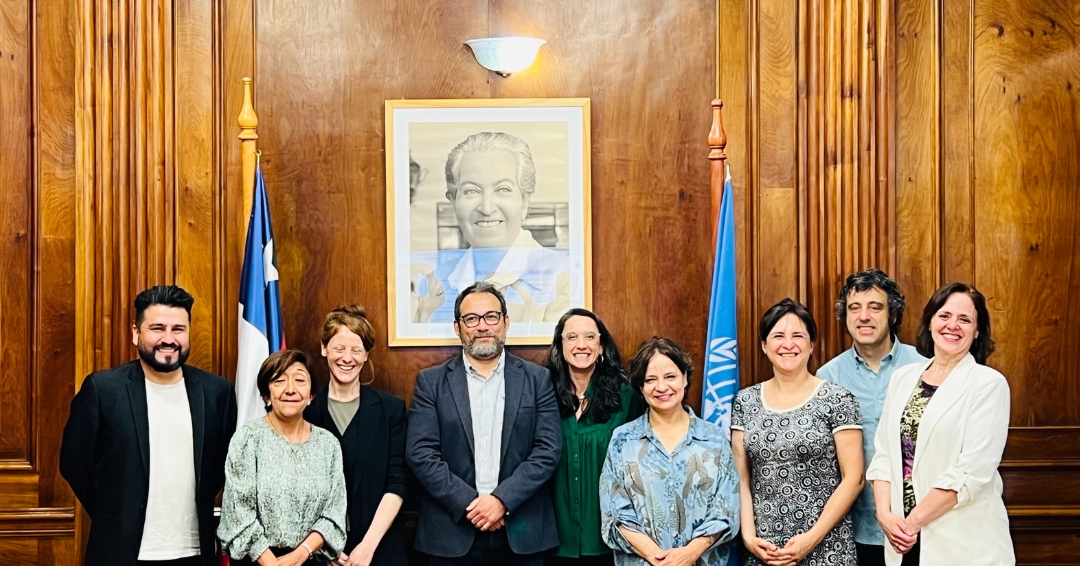
The meeting, organized as part of Regular Fondecyt Project N°1230748, brought together international researchers and media representatives to discuss the economic, informational and structural challenges of the digital ecosystem.
Ana María Bizberge, Doctor of Social Sciences from Universidad de Buenos Aires and professor at the Academic Department of Communications of Pontificia Universidad Católica del Perú, and Marina Pita, Secretary of Digital Policies of Brazil’s Presidency of the Republic, took part in a meeting with representatives of Chilean media at the UNESCO Santiago office. The meeting assembled actors from the field of information to discuss the media ecosystem and sustainability in a digital context.

The activity was part of the working meeting “Economic Sustainability of Information Work in the Digital Space. A Dialogue with Chilean Media Based on Comparative Evidence”, organized by the research team of Regular Fondecyt Project N°1230748 led by Universidad de Chile academic Chiara Sáez in collaboration with the UNESCO Regional Office in Santiago.
The purpose was to address the structural consequences that digitalization has generated in the Latin American media ecosystem, with a special emphasis on media dedicated to news production. With a comparative approach, the meeting sought to go beyond a diagnosis to learn about experiences and responses that other countries and organizations have developed with respect to the centrality of digital platforms.
The conversation focused on the effects of market power and the platforms’ design in key areas such as economic sustainability, information pluralism and audiovisual diversity.

Regarding the event, Chiara Sáez pointed out that the collaboration with UNESCO was relevant to continue this discussion in the public sphere:
“It helped us raise issues, especially considering the transformation that the UNESCO Office in Santiago is currently undergoing, as it will cease to be solely regional for education and will also incorporate other action areas, including communications. This meeting was an act of opening the discussion about the sustainability of information work in the digital ecosystem.”
She also highlighted the contributions of the international guests:
“What they both suggested was very interesting, Ana from a more analytical and conceptual perspective, and Marina based on concrete experiences taking place in Brazil. The participation of media representatives was also important because it allowed assessing the depth of the problem faced by them today in terms of sustainability.”
Javier García, who is an academic at the Universidad de Las Américas, also reflected on the meeting and its contribution:
“The event enabled us to gauge the depth of the sustainability challenges that media organizations face today, based on testimonies from local outlets and new digital media.”
 ENGLISH
  ESPANOL