
From mid-August to early September, the #RegulaciónConvergente Project stepped out of its comfort zone. One thing that the research team of this Fondecyt project has in common is that we firmly believe that scientific knowledge cannot stay within the walls of the university and must go out into the world to be shared but also compared to the complex reality we aspire to understand through the scientific method.
The project’s original design contemplated different dissemination actions once we had sufficient findings to discuss and problematize with others. That is how, in August, we held workshops in the north (La Serena and Coquimbo) and south (Temuco) of the country.
The purpose was two-fold: on one hand, to gather information about the state of the discussion on various aspects of digital convergence regulation in regions outside of the country’s capital and, on the other, to provide training on the issue among social and trade organizations, the academia, civil servants and students of university programs related to the research topic (journalism, law, sociology, political science, public administration, economics).
Both in the north and the south, we held two workshops to delve into some topics among people with more similar profiles. Special mention and appreciation are owed to our friends in regional universities, with whom we created alliances to carry out the activity.
The issues that emerged from these conversations included the position of the regions in a regulatory institutionalism of the convergence of communications, a concern about the perception of weakness and dispersal of functions linked to the regulation of various aspects of communications among different public institutions, the need to innovate in legislations and institutions adapted to the new challenges, the protection of the technological sovereignty of small countries like Chile against the interests of big techs, the dependency generated by algorithms on visibility and the economic sustainability of journalistic work, disinformation and information bubbles, the regulation of the use of generative AI in reporting practices during electoral processes, how to reconcile regulation with the exercise of freedom of expression and ensure regulatory autonomy regarding the administrations in power, connectivity issues that still exist in some regions and operate as forms of exclusion, the dissolution of the limits between being a journalist and being a content generator or influencer, the gender-class-ethnic group intersectionality in digital harassment situations, who ensures the protection of our personal data in this new scenario, the importance of media literacy public policies for senior citizens but also youth, and citizen agency to address these issues and not just wait for top-bottom solutions, among others.
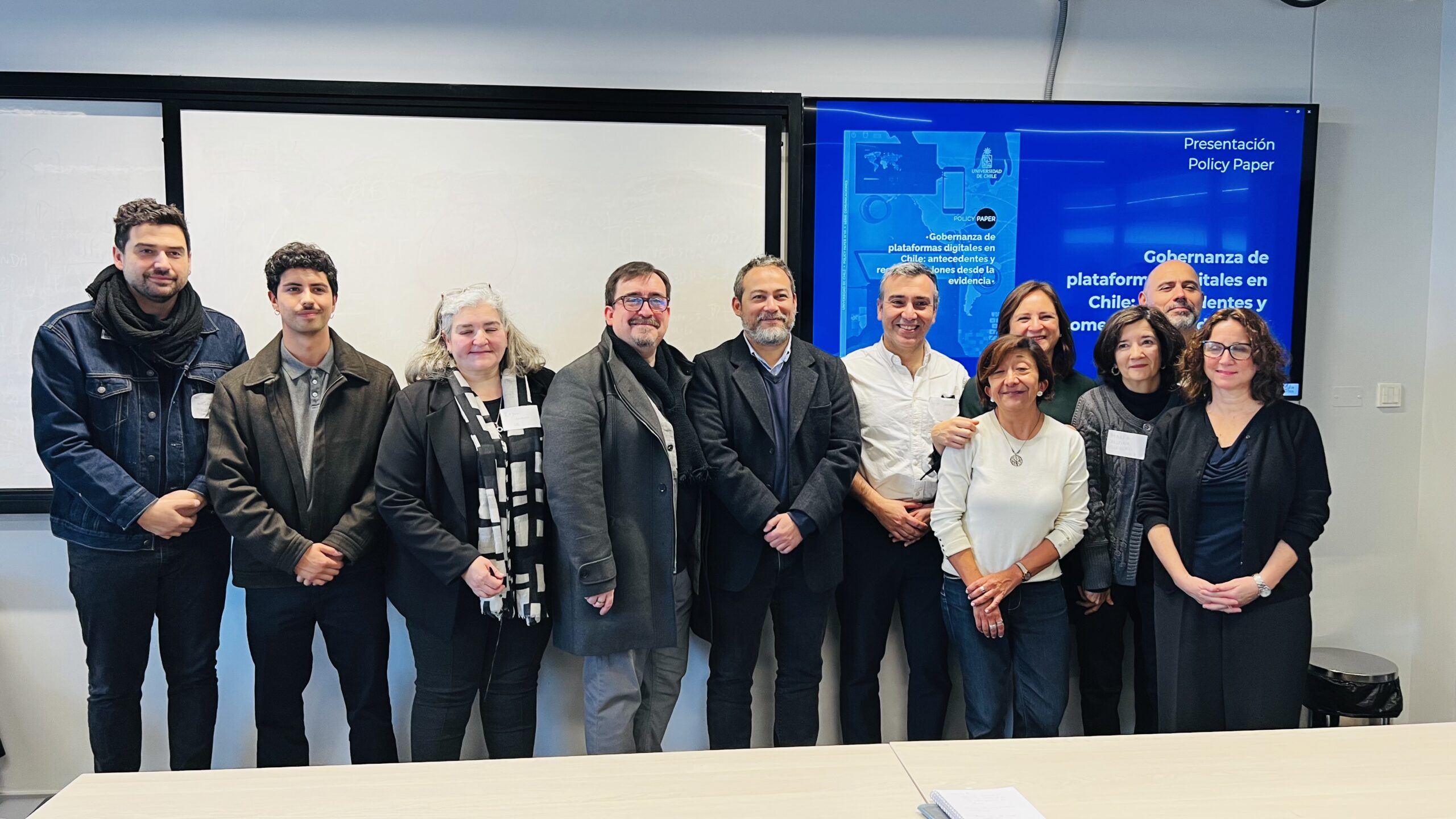
After this intense experience, we set up a scientific technical meeting in early September entitled “Evidence-Based Regulation of Techno-Media Convergence. A Dialogue with Relevant Actors”. Its goal was to present the methodology, instruments and findings of our work to researchers of national think tanks and universities who have addressed relevant lines of the project to receive their opinions, criticism and expert feedback. It was an interdisciplinary space that brought together professionals from the fields of communications, law, sociology, engineering and political science, among others, who allowed us to introduce improvements in some aspects of the research process.
However, the most interesting aspect of the conversation in this space was the question about how advocacy with relevant actors of the sector in the topic of our research is advancing based on the evidence.
Several clues emerged regarding how this project must continue to step out of its comfort zone and be open to a dialogue with actors from the public and private sector, particularly from the industry, digital platforms and trade unions, the importance of reviewing the European Union’s measures again, both those that have worked and those that haven’t, and understanding the geopolitical context in which this conversation arises while also leveraging the conditions that coordination between the academia and the civil society can enable in these issues.
In summary, more work. But we already knew that. Because although we are making this effort in unequal conditions compared to other parties, it is our firm conviction that we need to move the needle in this discussion and that Chilean political culture cannot be seen as a factor that univocally determines or predestines the conditions or possibilities under which an improvement of the regulatory institutionalism of digital convergence may be advanced; it is rather a context variable to consider, but which we can also transform through our own actions.
By Chiara Sáez, September 2025
 ENGLISH
  ESPANOL